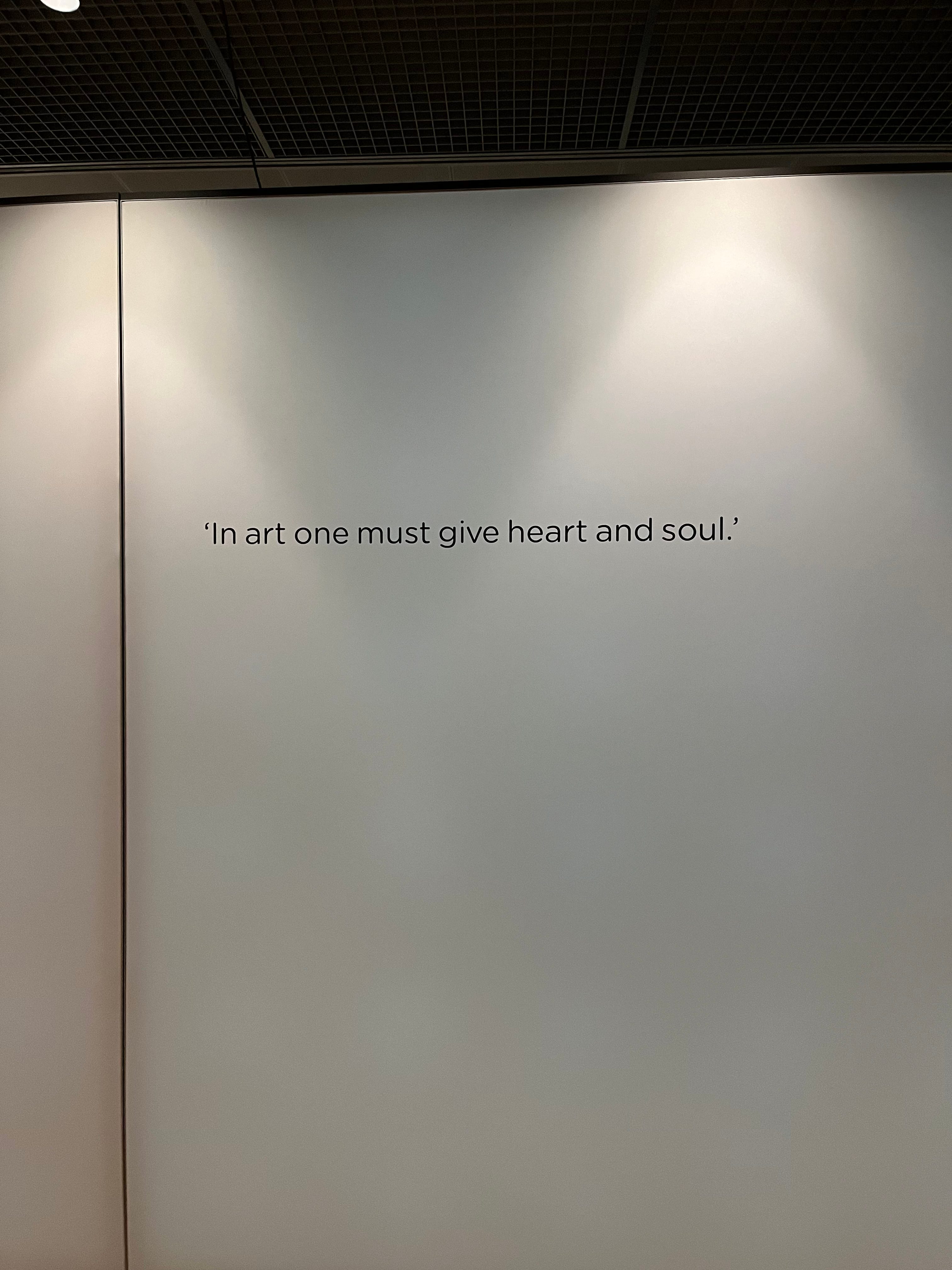
I used to see art as a hobby — something you do to pass the time. It was taught to me that way, ever since I was little. It was a nice, warm escape from the tedious schoolwork we had to do.
As I grew up, I came to realize that the stress of school was replaced by the stress of modern life. And now that I was an adult, there were more quick options available to relieve my stress.
And slowly, I stopped being creative. Without creative expression, I didn't have an outlet — the one space where I could express my pain. And without it, my old wounds started to get louder.
I started to feel stuck. My past traumas began to haunt me. I felt grief's heavy hands on my neck. I felt like I was drowning.
I wanted to make sense of this immense pain. I felt so lonely.
I needed to breathe again — to feel alive.
In our modern society, where we are constantly rushing around, art doesn't become our priority. And even if we engage in creativity, it's often just to feel nice and warm. But that can be a problem.
Actor and writer Ethan Hawke addresses this issue. In a TED Talk inviting people to be creative, he reflects on the importance of creativity:
"Most people have a life to live and they're not really that concerned with Allen Ginsberg's poems or anybody's poems until their father dies. You lose a child. Somebody breaks your heart. And all of a sudden you are desperate for making sense of this life. Has anybody felt ever this bad before?"
He then adds with urgency:
"Creativity is not luxury, it is sustenance. We need it. It is not something warm, pleasant. It is vital. It is the way we heal each other."
Then one might ask: what is the objective of art? Is it to kill time on the weekends? To escape? To feel better? To feel high so we can forget our pain?
Glenn Gould eloquently describes how art serves us:
"The purpose of art is not the release of a momentary ejection of adrenaline but rather the gradual, lifelong construction of a state of wonder and serenity."
When life feels unbearable, we reach for quick relief — a scroll, a drink, a distraction. It works, for a moment. But the pain never goes away; it waits patiently, the way a hunter waits for its prey.
But as we begin to create — and as we begin to consume art — we build the capacity to hold our pain, the way a mother holds her baby. We get closer to that place where darkness and lightness co-exist, the place where there is no right or wrong.
That is why we need art. To feel alive. To feel the pain. To honour it, and to express it. To grow bigger than our pain — bigger than our stories, our traumas.
We need creativity. Desperately. We need it to feel high on life, not high on drugs or people. To make our suffering meaningful.
We need it so that we can finally stop running — and face our demons with courage. We need it to be able to say, "I am not what happened to me. I am what I chose to become."
Van Gogh Museum, Amsterdam